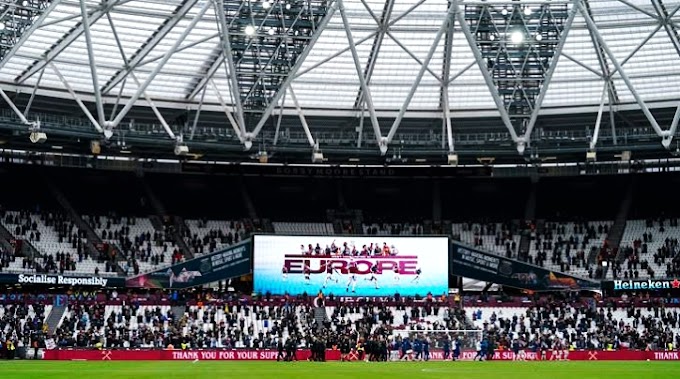
What do you think are the key factors that have contributed to West Ham's success in Europe?
I might not be aware of West Ham United's recent success in Europe. I can, however, list a few important elements that frequently help a team succeed in European competitions:
roster quality: A team's prospects of success in Europe can be significantly increased by having a talented and well-balanced roster with skilled players in various positions. This includes having a mixture of seasoned athletes and young, talented players.
Managerial Strategy: The manager's tactical approach, game plan, and overall strategy are all very important. In European competitions, employing strategies that maximise the team's strengths while taking advantage of the shortcomings of the opposition might be crucial.
Squad depth: Playing several matches against challenging opponents on a packed schedule is common in European competitions. A team may rotate players, manage injuries, and maintain performance levels throughout the season by having a deep roster with strong backup choices.
Mental toughness: Because of the larger stakes and more intense games, European competitions can be mentally taxing. Success requires the capacity to bear stress, keep one's composure, and recover from failures.
Defence: In European championships, where even minor errors may be costly, a good defence is essential. The basis for success can be laid by a defensive unit that is disciplined and well-organized.
Moments of individual brilliance may frequently make the difference in close European matches. It can be quite valuable to have players who can create magical moments, score important goals, or seize opportunities.
Tactical Flexibility: Teams from various leagues and playing styles are mixed together in European championships. It's crucial to have the tactical flexibility to adjust to various opponents and game scenarios.
Supportive Fanbase: A fervent and encouraging fan base may produce an electric atmosphere during home games that can motivate and inspire the team to play to their highest potential
What is your experience of living in Hong Kong compared to other cities, such as London or New York City?
Three of the world's largest cities—Hong Kong, London, and New York City—each have distinctive qualities and amenities of their own.
The striking skyline, colourful culture, and thriving street markets of Hong Kong are well-known attractions. A significant financial centre and entryway to China, it draws both visitors and businesspeople. The city offers a fusion of traditional Chinese heritage and modern development, combining Western and Eastern elements. Hong Kong is renowned for both its effective public transit system and its diverse culinary scene.
The iconic monuments the Tower of London, Buckingham Palace, and the British Museum are among those that make London, the capital of the United Kingdom, so well known. Numerous attractions are available in the city, including top-notch museums, theatres, and parks. London is a vibrant and dynamic city because it is a hub for international banking, business, and the arts. Additionally, it is renowned for having a diverse population and for having a good public transport system.
America's cultural and financial capital is frequently seen as New York City. The Statue of Liberty, Times Square, and Central Park are just a few of its famous landmarks. With a lively arts scene, various neighbourhoods, and a melting pot of ethnicities, the city
a lively nightlife. Wall Street, the hub of the American financial sector, is located in New York City, which provides a wide range of opportunities across numerous industries. The city is renowned for its huge underground infrastructure, which makes getting around relatively simple.
Each of these cities has an own personality, way of life, and opportunities. The greatest city for a particular person will rely on their personal preferences, job objectives, and lifestyle considerations. When contrasting various locations, it's critical to take into account elements like culture, employment opportunities, cost of living, and quality of life.
What do you think about the anonymous parent who challenged the King James Bible in a Utah school district?
I don't hold any personal beliefs or viewpoints. I can, however, provide you some knowledge on the subject you brought up.
I'm sorry, but I don't have any information regarding the exact incident in which a parent anonymously questioned the King James Bible at a Utah school district, as my training only lasts until September 2021. The incident might have happened after my deadline for knowing about it or it might not have received much media coverage.
However, it happens frequently for religious texts or materials to face opposition in public classrooms. These issues often centre on worries about the promotion of religious neutrality in the educational system and the separation of church and state. These difficulties can be complicated, and they frequently entail discussions about the proper place of religion in public education as well as legal issues.
I can try to give a general perspective based on my training data if you need more information or have specific concerns about the occurrence, but please be aware that it might not accurately reflect the unique facts or arguments surrounding the anonymous parent's challenge.
How did the tower of Barad-dûr fall?
The Tower of Barad-dûr, a made-up building from J.R.R. Tolkien's "The Lord of the Rings," collapsed during the War of the Ring's climactic battles. The defeat of Sauron, the Dark Lord, and his troops was symbolised by the destruction of Barad-dûr. Here is an explanation of what transpired:
Frodo Baggins, the keeper of the Ring, and Samwise Gamgee, his devoted companion, entered Mordor, the kingdom governed by Sauron, during the Battle of the Morannon, the decisive conflict between the forces of good and evil. The One Ring, which contained the source of Sauron's power, was the target of their mission.
Aragorn, the legitimate heir to the throne, and Gandalf the White commanded the armies of Gondor and Rohan as they launched a diversionary assault on the Black Gate of Mordor to divert Sauron's attention away from Frodo and Sam.
Frodo and Sam arrived at Mount Doom, a volcanic mountain in Mordor, as the battle raged around them. Gollum attacked Frodo and chewed off his finger before stealing the Ring for himself. He was a beast obsessed by his love for the Ring. Gollum destroyed himself and the Ring when he lost his balance and plummeted into the fiery pit in his insanity.
The source of Sauron's power was fractured when the Ring was destroyed. The foundations of Sauron's former fortress, Barad-dûr, the Dark Tower where he lived, were destroyed along with the Eye of Sauron, his primary manifestation.
The fall of Barad-dûr served as a metaphor for Sauron's tyranny ending and the triumph of the Free Peoples of Middle-earth.
It's vital to remember that the Tower of Barad-dûr and the events leading up to its destruction are included in J.R.R. Tolkien's make-believe world and "The Lord of the Rings" story.
During the pivotal battles of the War of the Ring, the Tower of Barad-dûr, a fictional structure from J.R.R. Tolkien's "The Lord of the Rings," came tumbling down. The obliteration of Barad-dûr served as a metaphor for Sauron, the Dark Lord, and his army. An explanation of what happened is provided below:
During the climactic Battle of the Morannon between the forces of good and evil, Frodo Baggins, the keeper of the Ring, and Samwise Gamgee, his loyal companion, entered Mordor, the country ruled by Sauron. Their aim was to find The One Ring, which housed Sauron's power source.
The troops of Gondor and Rohan launched a diversionary attack on the enemy while under the command of Aragorn, the rightful successor to the kingdom, and Gandalf the White
.
The source of Sauron's power was fractured when the Ring was destroyed. The foundations of Sauron's former fortress, Barad-dûr, the Dark Tower where he lived, were destroyed along with the Eye of Sauron, his primary manifestation.
The fall of Barad-dûr served as a metaphor for Sauron's tyranny ending and the triumph of the Free Peoples of Middle-earth.
It's vital to remember that J.R.R. Tolkien's fictitious world and the story of "The Lord of the Rings" include the Tower of Barad-dûr and the events leading up to its destruction.
What is your view on SAG-AFTRA's negotiations being for the benefit of all its members, not just big stars?
Actors, broadcasters, recording artists, and other entertainment business professionals are all represented by the labour union SAG-AFTRA (Screen Actors Guild-American Federation of Television and Radio Artists). The main objective of the union is to uphold the rights and interests of its members by ensuring that they receive fair treatment, just compensation, and secure working conditions.
SAG-AFTRA negotiates for better contracts and working conditions for all of its members, not just the biggest stars. While well-known figures may command greater attention and influence in negotiations, the union works to represent the various interests and issues of its whole membership.
Establishing industry-wide standards for pay, residuals, healthcare, and other benefits requires SAG-AFTRA to engage in negotiations with employers and production firms. In order to improve conditions for all participants, these agreements involve addressing the issues of actors and performers at all tiers of recognition and experience.
No matter their level of renown or prominence, all of the union's members should receive fair income, equitable treatment, and adequate protections. SAG-AFTRA wants to make sure that all of the people it represents in talks receive the advantages by acting collectively.
What are some potential long-term implications of high unemployment rates in California, Washington, and Oregon?
States like California, Washington, and Oregon may see substantial long-term effects as a result of high unemployment rates. Here are a few possible outcomes:
Economic Impact: High unemployment rates can result in lower tax receipts, slower economic growth, and decreased consumer spending. Due to the inability of enterprises to produce money, they may be compelled to downsize or close, which would result in further job losses.
Poverty and disparity: Both poverty and income disparity are made more likely by unemployment. People who lose their jobs could find it difficult to cover essential expenses like housing, food, and medical care. Individuals,
families, and communities may have long-term consequences as a result, such as an increase in social and health issues.
Brain Drain: Highly skilled individuals may relocate to other states or nations in quest of better job chances if unemployment persists for an extended period of time. The afflicted states may experience a loss of intellect, innovation, and economic competitiveness as a result of this brain drain.
High unemployment rates can put a pressure on social services including unemployment compensation, welfare programmes, and hospital infrastructure. Governments may struggle to accommodate the increased demand for aid, which could result in budget deficits or reductions in other areas.
Reduced Workforce Productivity: Prolonged unemployment may cause workers' skills to deteriorate and their output to drop. Long-term unemployment can cause people's abilities to deteriorate, making it more challenging for them to enter the workforce again. This may reduce overall economic productivity and delay the economic recovery.
People may choose to relocate to neighbouring states or regions with greater career prospects if there are few job possibilities. A population decline could emerge from this, which might have an impact on regional economies, housing markets, and public services.
Social Unrest: Long-term unemployment can fuel community discontent and social unrest. An rise in crime rates, social conflicts, and political instability can result from frustration and financial hardship.
Focusing on job creation, workforce development, and economic diversification is essential for states if they want to lessen the long-term effects of high unemployment rates. Investments in infrastructure,
education, and training programmes can help draw in business, boost the economy, and generate employment opportunities. Targeted assistance for struggling industries can also help to reenergize the labour market and lower unemployment rates.



.jpeg)